Road Trip Stories
With fresh insights

Hi friend,
How are you? I hope you’re having a relaxing summer.

If you recall, I took some time off. We had a terrific time road tripping from Miami to Savannah last week.
History - which is nothing but a long chain of linked stories - was everywhere for us to discover.
To keep it manageable, we stopped for one night at St. Augustine, FL. The last time we visited there was 30 years ago as grad students at the nearby University of Florida in Gainesville.
So from this perspective, it was quite nostalgic to compare and contrast.
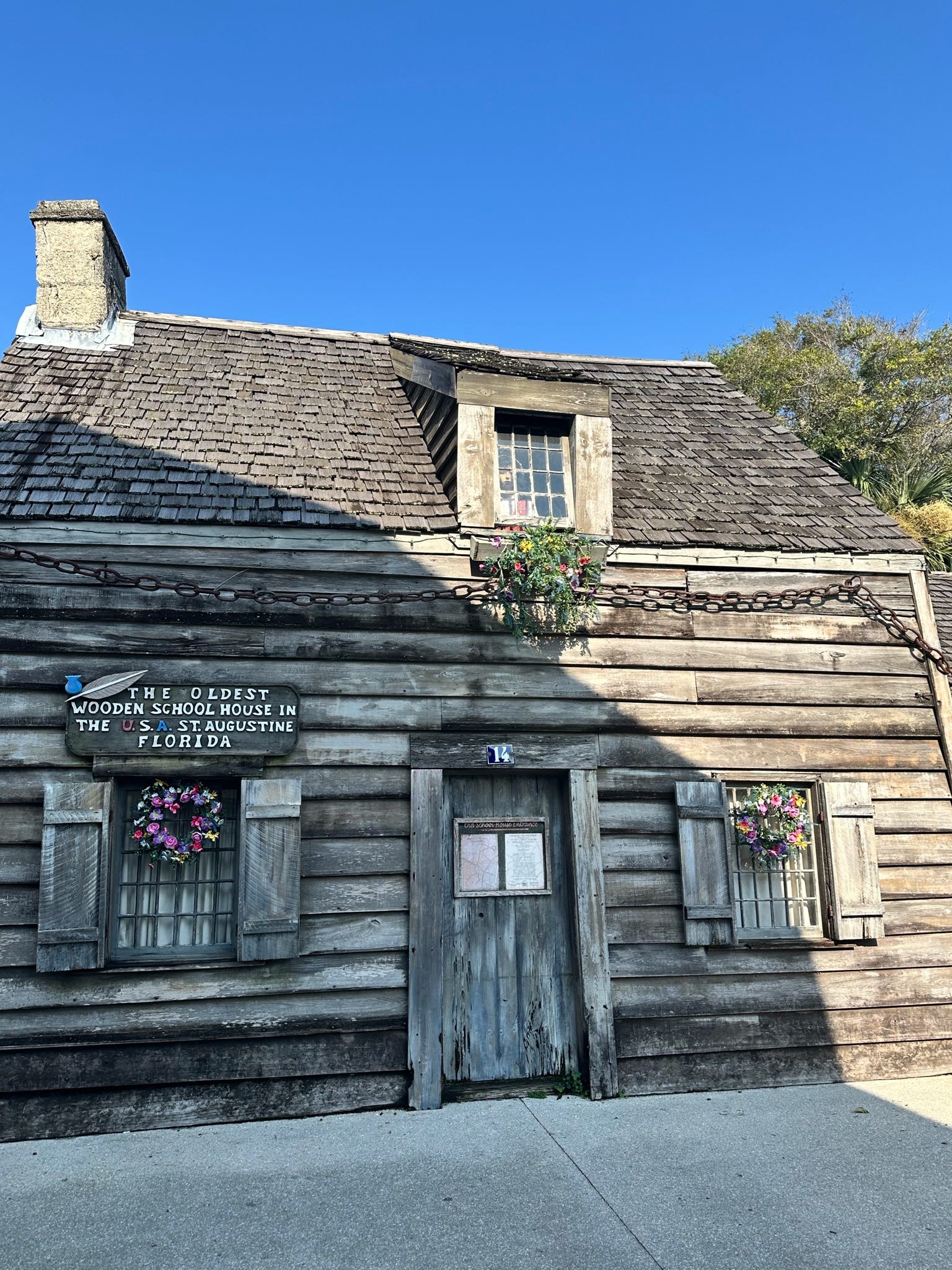
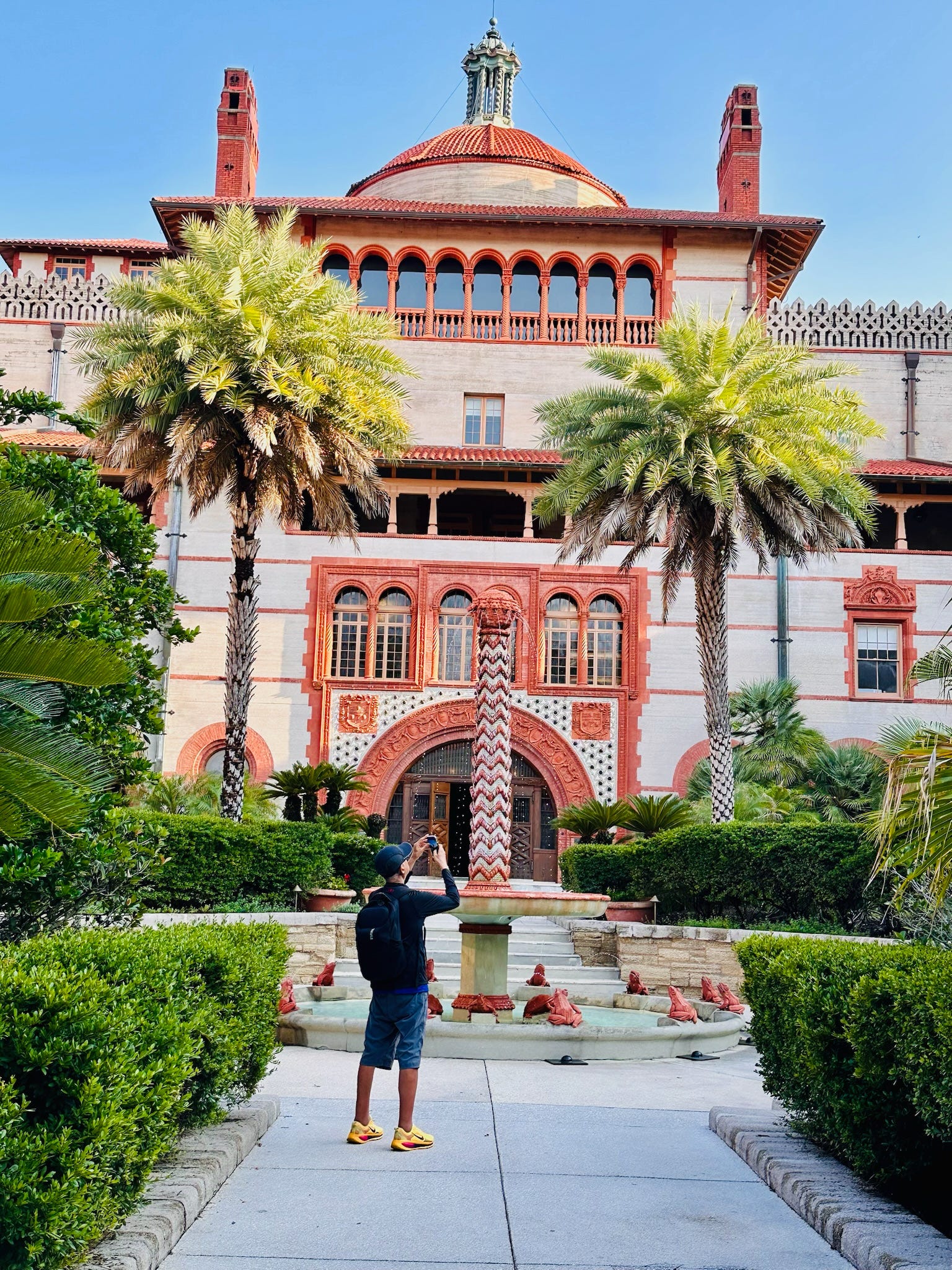
And of course, you can’t stop by St. Augustine without paying a visit to Flagler College.
This place was operated as the Hotel Ponce De Leon from 1888 to 1967.
You’d think this exquisitely designed hotel is a remnant from the time Juan Ponce de León, the famed Spanish explorer, first landed in 1513.
But in reality, Henry Flagler, a retired oil tycoon, hired the New York architects John Carrère and Thomas Hastings to design it for America's elite winter travelers.
It popularized St. Augustine as a luxury destination.
Their design was inspired by Spanish Renaissance architecture, with Spanish-Moorish influences. It was opened to guests on January 12, 1888
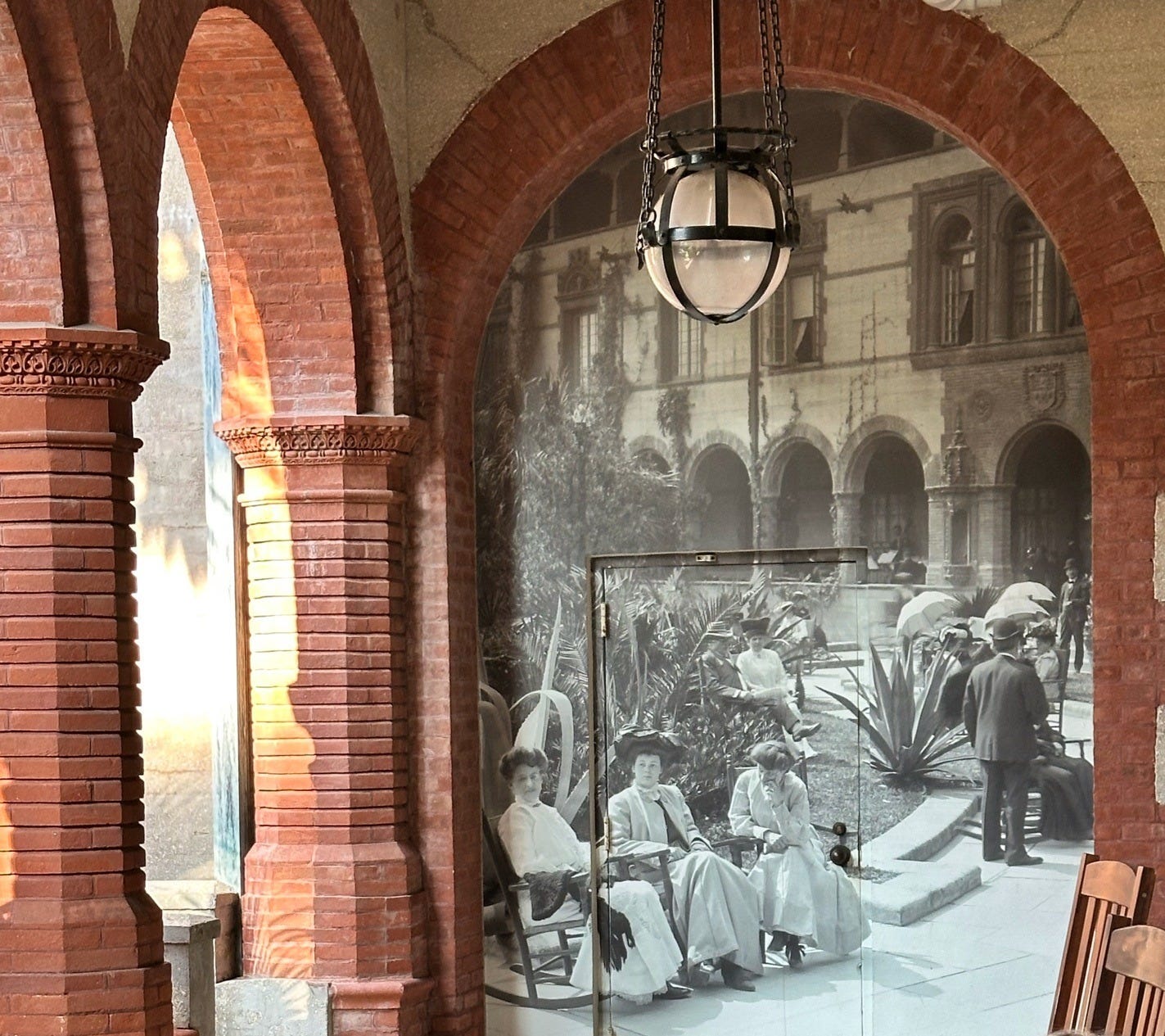
Back then, affluent families used the train to travel down from all over to vacation in this hotel, before South Florida became the new magnet.
How much did they pay per night? Great question!
No such thing.
Guests typically stayed in the hotel for the whole winter season - from summer until Easter. They paid about $4,000 per person, which in today’s money amounts to $140,000!
You’d think I walked with a visitor guide or Googled questions.
This trip it was different.
The fun part was using ChatGPT voice mode as my personal tour guide. It was remarkable how much visual information you can get for the precise location you’re at.
As I was staring at the guests you see above, I was intrigued and asked what their lunch looked like back then:
“Checking…Lunch there was a fancy affair. Picture Gilded Age travelers sitting under the soaring ceilings with multi-course meals. Menus leaned heavily on fine European styles, but also featured Florida touches like fresh citrus and local seafood. Pompano was a favorite, along with things like roast poultry, seasonal vegetables, French-style sauces, and I'm sure some extravagant desserts. So it was less about quick bites and more about showing off luxury, kind of like a performance of refinement.”
Incredible! Now I can create an extended mental picture with the vivid details.
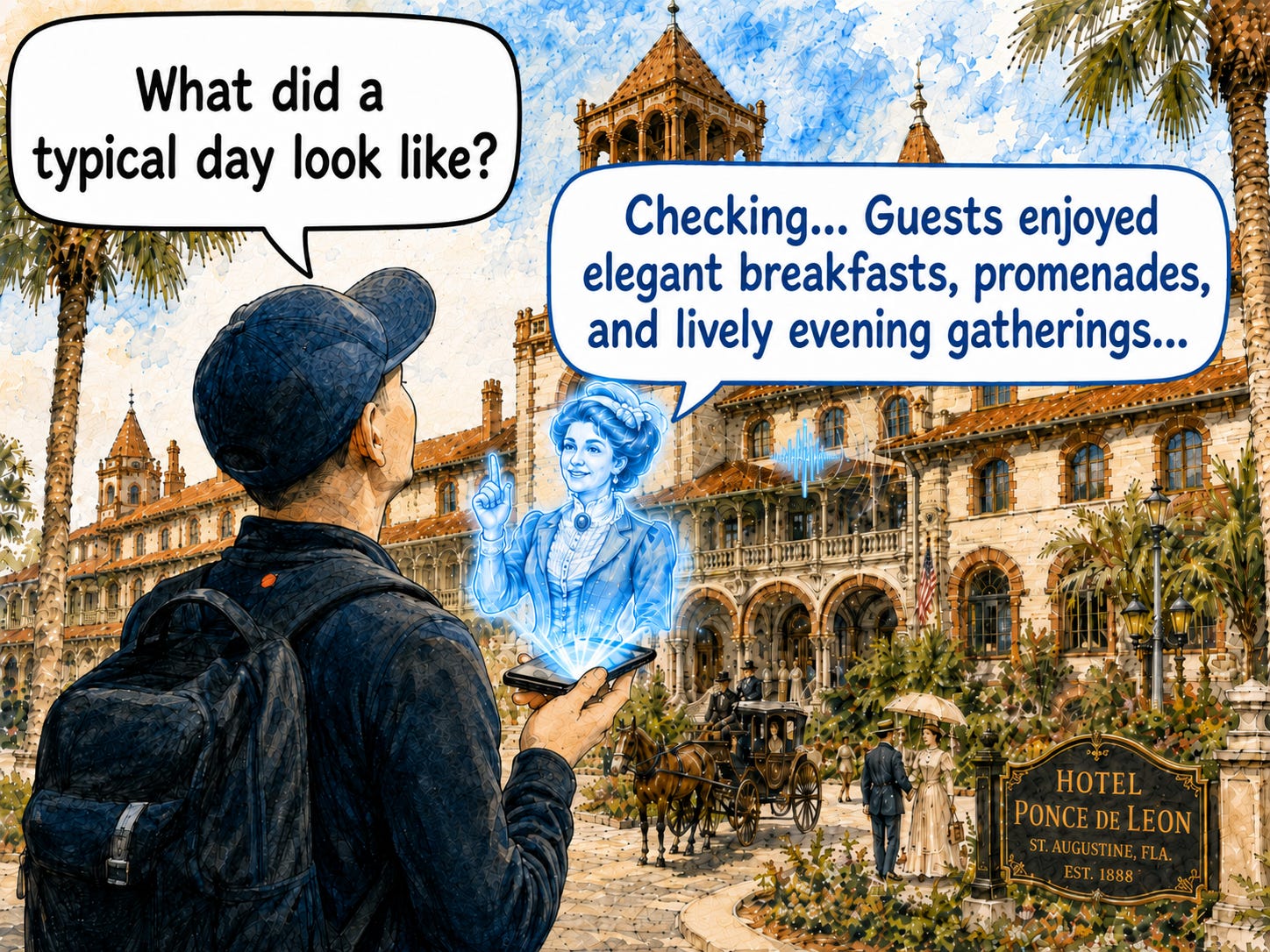
I used the audio dialog, but I bet if you snap specific photos to probe, you’ll likely get even more targeted information.
I liked the ease of the audio multitasking, more fluid aspect. Walking around while asking and picturing the new information.
Unlike an audio headset you get in museums with pre-programmed narration you passively consume, with Chat, it feels much more interactive.
In fact, we continued conversing with Chat while driving north from St. Augustine to Savannah.
We learned a ton about the long-gone local Timucua native people with roots stretching back centuries, even millennia. Intrigued, we zoomed in on their daily routines, diet, outfits, and social events. They remained distinct until disease and displacement fractured that continuity in the 1700s.
If you ask me, I’d vote for this kind of 1:1 “interactive podcast” where you can drive the conversation’s direction around your interests.
Be cautious, though. It’s quite immersive to the point we missed one exit…
The catch is you need to ask the bot to serve as a “visual storyteller,” focusing on a scene in front of you, and in it on the fine details.
Your brain will then take over with a mental clip :)
Savannah, GA was a whole different historic experience.
To experience the rich history, we picked the Hamilton Turner Inn that faces Lafayette Square in Savannah’s Historic District.
This B&B is one of Savannah’s best-known allegedly haunted hotels. We didn’t hear anything, but we occasionally saw the ghost bus tour stopping by.
The Inn is also known for the famous Midnight in the Garden of Good and Evil, John Berendt’s 1994 nonfiction book, adapted into a 1997 film directed by Clint Eastwood.
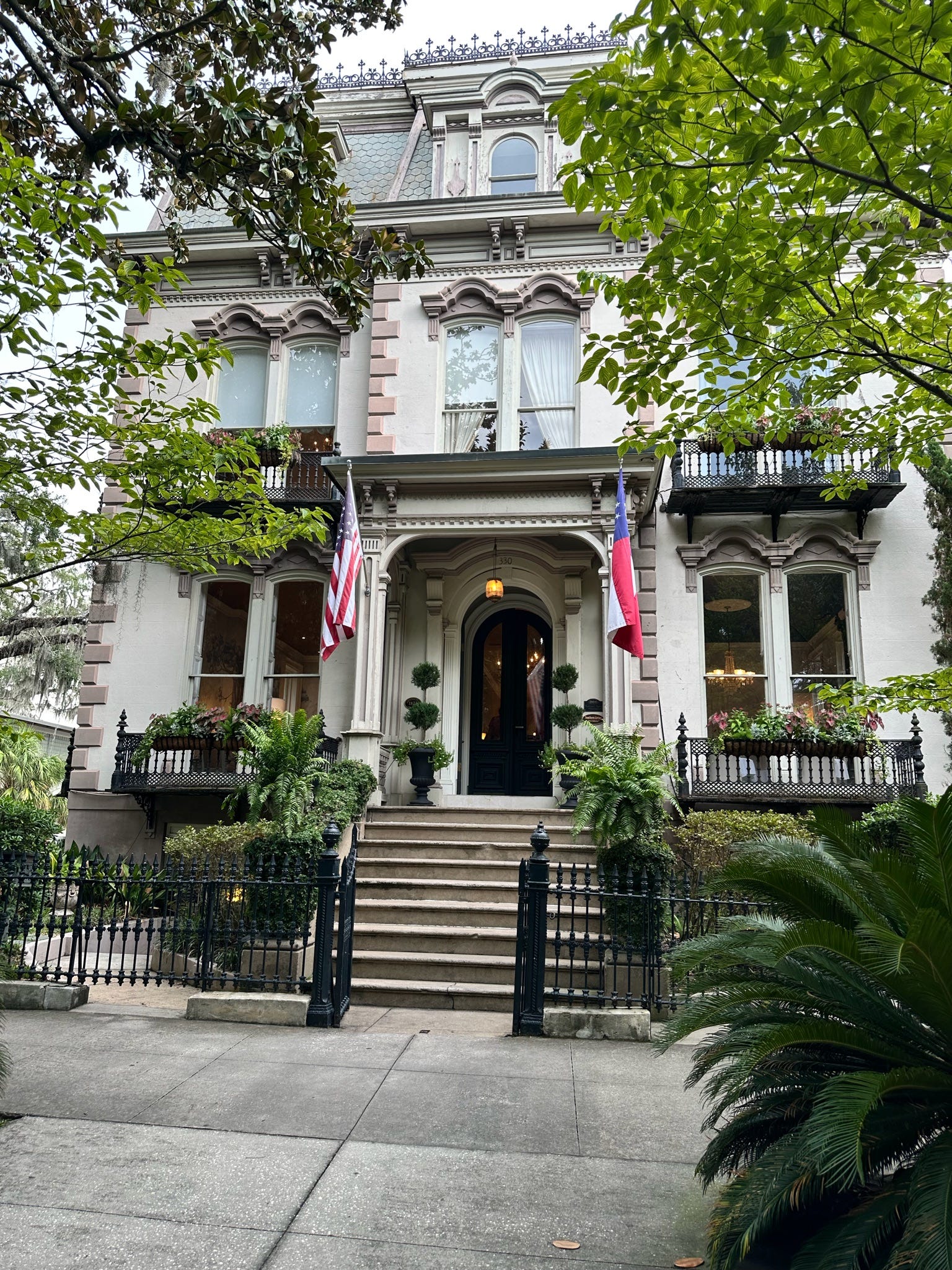
Staying in this inn, with its elegant breakfast, happy hour in this “period-BBC-TV-series-like” salon, and friendly guests we had long conversations with, made me think.
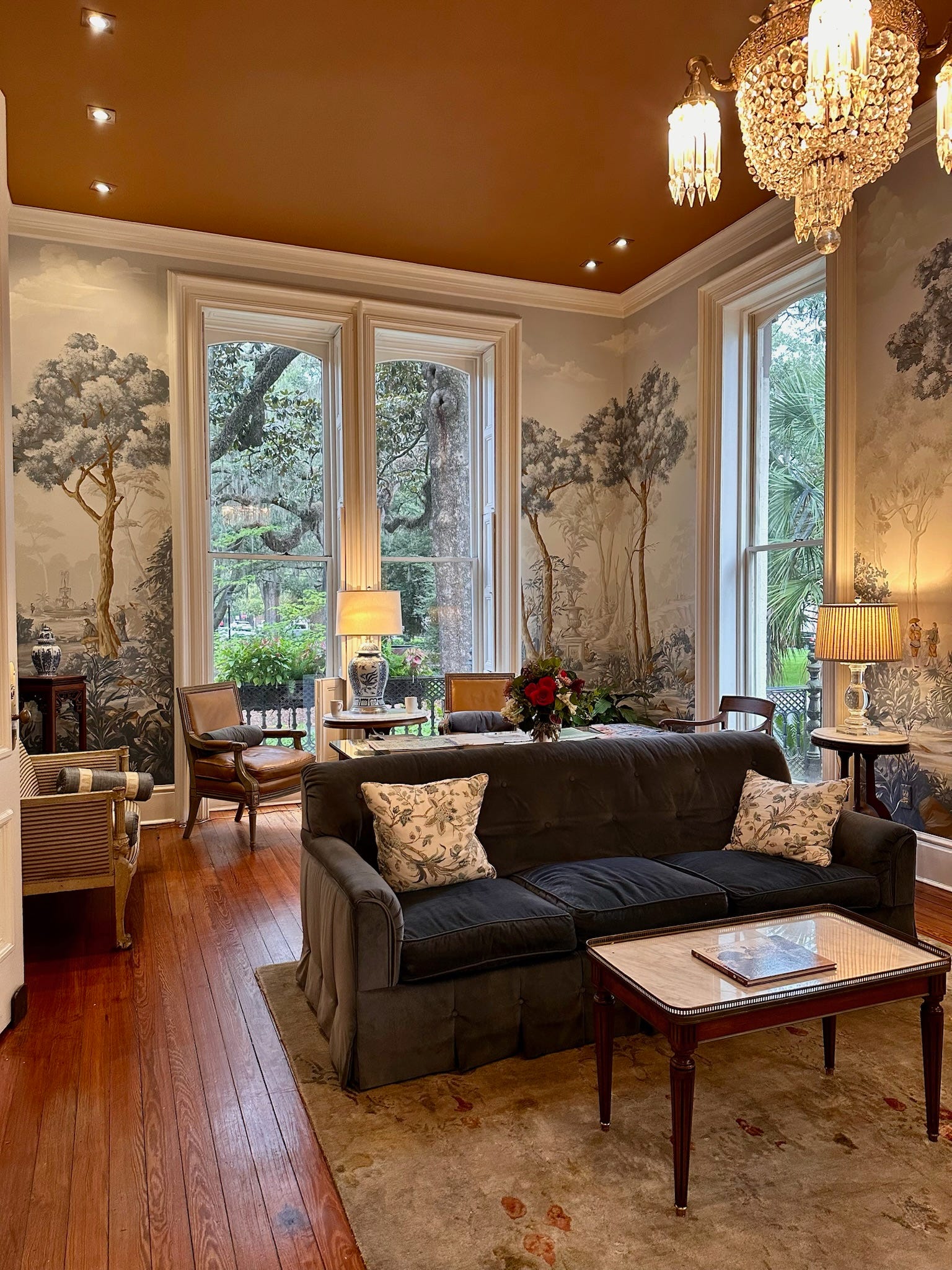
At the end of the day, yes, sometimes people want their privacy, and I saw that in a standard hotel we stayed in later in our trip. Most communal spaces didn’t encourage conversations.
But if you set up the conditions for people to meet each other, people truly want to be seen and learn something new about people who, for a day or two, shared the same roof with them.
So, if you’re looking to boost social interaction in your company among employees or with customers, you need to create the opportunities for them to engage.
This is especially true with today’s diverse work environments: remote, hybrid, and onsite.
Beyond expensive team retreats, a simple shared lunch or tea time with no agenda can do the trick.
People’s mindset is then pre-wired to socializing. This simple setup can make a huge difference for idea exchange and simply building human connections to strengthen your team.
After all, regardless of agentic AI, throwing a bunch of strangers into an office and expecting them to produce top results without creating opportunities for them to first get to know each other on a human level could be tough.
Just a few insights from my road trip, during which I also found time to redesign this newsletter logo. I hope you like it.
See you next time!
Best,
- Shlomi
Shlomi Ron
Founder, Visual Storytelling Institute
shlomi@visualstorytell.com | Follow me on Notes
story > visual > emotion > experience