How to Turn the Unknown Into an Obsession
Case study: Your music playlist


Do you have a new music playlist you’re currently enjoying?
You likely picked it up because you liked only two songs
The rest are completely unknown
A music algorithm (AKA “music editor”) guessed you may like the other songs
A month passed
And like magic, a few of those “unknown songs.”
Surface up in your likability radar
And you find yourself rejoicing
Every time these songs show up
Your new infatuation!
Then you look up the songs’ videos on YouTube
To get a closer look at the artists, lyrics, and their vibes
Why is that?
Something in those songs perfectly maps
To your mental library of music favorites
Past experiences
Your current emotional state
And personal narrative
Hey friend,
It’s nice to see you here. Hope you had a great week.
That is, assuming you’re reading this today, Sunday.
This song infatuation tale happens to me quite often.
Beyond my initial interpretation of why this happens, I had to dig deeper as this phenomenon has larger storytelling implications.
Here is what’s really happening under the hood when you fall in love with new songs:

One key observation, looking at this process, is the importance of the user’s personality type.
You need to be an explorer, an ever-curious learner seeking new experiences, to go through these 8 steps of transforming the unknown into the obsessed.
What also stuck out for me - which is not news anymore - is the key role algorithms play in exposing us to new content - songs, movies, ads, articles, etc.
The upside is the statistical probability that we may like those related songs.
Think of it as “programmed serendipity.”
I bet even without the algorithm, if I’d randomly have you listen to a bunch of songs you never heard before without knowing your likes and dislikes, I bet just the exercise of repetition will do its magic, as your “spongy brain,” over time, will be trained to anticipate the musical story arc and emotions.
The downsides of algorithms, as was documented in public-health investigations, is of course their vicious cycle of pushing toxic, harmful, and addictive content because outrage, fear, and emotional vulnerability often maximize user engagement.
I’m trying something new on Notes next week.
It’s called HushWave — a micro-drama about a Miami startup building an AI sound-cancellation product.
No headset.
No earbuds.
No wearable device.
Just a story about noise, technology, and human judgment.
New episodes drop Monday, Wednesday, and Friday at 9:03 AM ET.
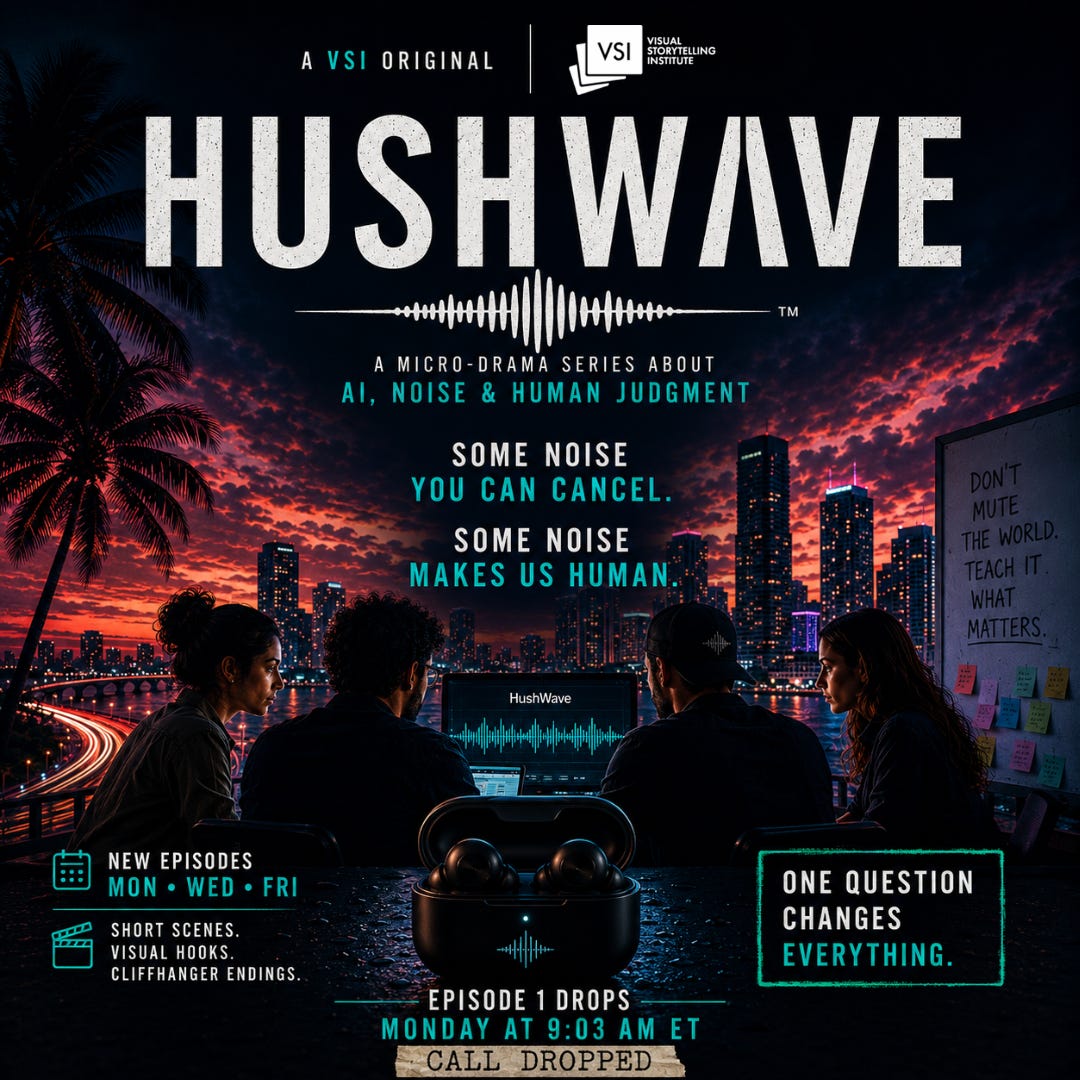
Follow along: https://newsletter.visualstorytell.com/notes
Why care?
This content adoption dynamic could help you deliver more balanced stories that combine known and unknown elements.
In marketing, you’ll often see a new product launch with a clear statement, “From the same company that brought you [their top-selling product]” - to build credibility and extend their brand equity.
You can find this “halo effect” when Apple launched the iPad in 2010, riding on the iPhone's success (2007). People already knew how to use the iPad, and it came from a trusted brand.
Same deal when Diet Coke came to market in 1982. Within a year, it grossed more sales than its non-diet sibling.
It’s only fair to mention also spectacular flops like New Coke (1985), or Amazon’s Fire phone (2014), failing to “rekindle” Kindle's massive success :)
Like in any product launch, you need to do a comprehensive product market fit to maximize your success prospects before spending one dollar on development.
Storytelling is no different. You want to lead with what’s been working, while experimenting with new angles, timely stories, customer vibes, and more.
With repetition, like magic, your new stories could become your customers’ new obsession.
Mix it up
It will also help you diversify your storytelling strategy, pushing the envelope with new topics, untapped storytellers, latest tech, workflows, and more.
Think about your eating diet, it’s about mixing home-cooked sure bets with occasional eating out for the novelty effect.
Heck, even within each bucket, we seek diversity.
Your usual homemade dishes, but you cook something different or test new ingredients. This is also true when you try out new restaurants.
We like mixing things up to keep it interesting and unexpected.
This narrative tension between the known and unknown is the hook that keeps people loyal to your brand promise. Your job is to make it happen.
See you next time!
Best,
- Shlomi
Shlomi Ron
Founder, Visual Storytelling Institute
shlomi@visualstorytell.com | Follow me on Notes
story > visual > emotion > experience